


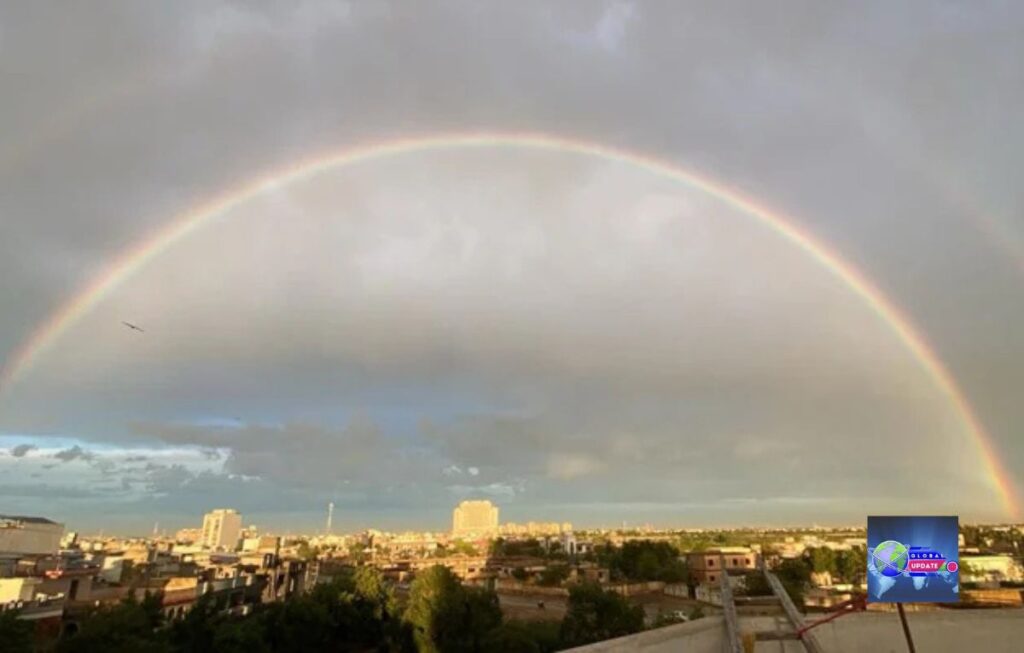

Following a period of intense rainfall, the city of Karachi recently witnessed an amazing natural phenomenon: a vivid rainbow formed in the sky.
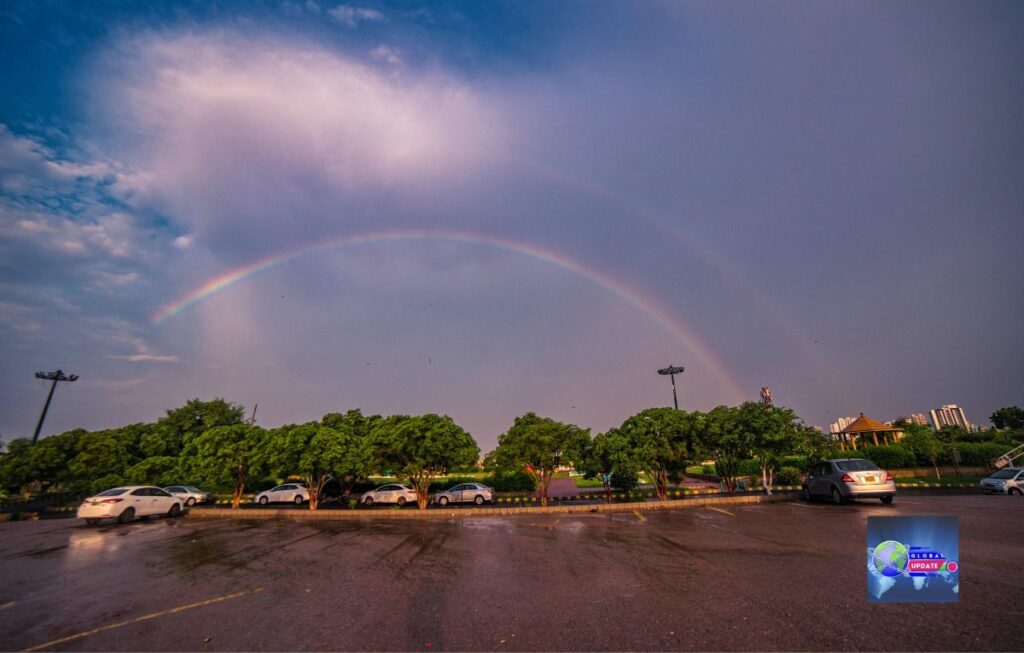
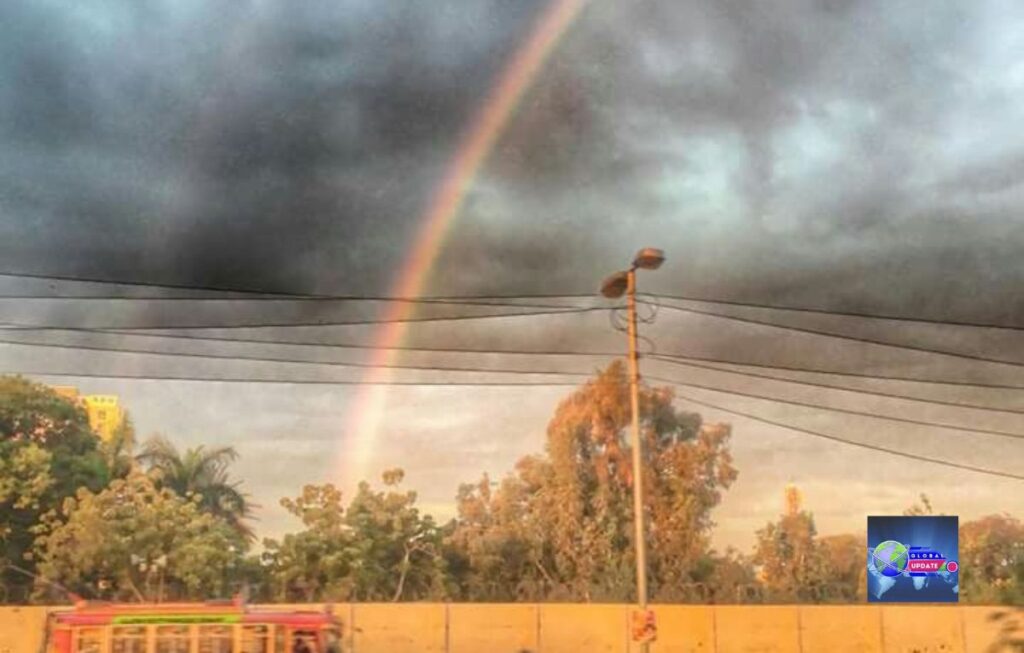
Residents from across the city posted pictures and videos of the vibrant arc, transforming an otherwise severe-weather event into a breathtaking moment.
The rainbow appeared shortly after a spell of heavy rain and thunderstorms that had affected the region in recent days.
According to weather reports, Karachi had been experiencing unusual weather patterns, including heavy rainfall, gusty winds, and thunderstorms, as part of a broader weather system affecting southern Pakistan.
A Welcome Sight After Stormy Weather
The rainbow came as a pleasant surprise to Karachiites, especially after the city endured severe weather.
In mid-March 2026, powerful thunderstorms lashed the city, bringing heavy rain and winds strong enough to disrupt daily life, uproot trees, and damage infrastructure.
The storms were part of an unusual weather pattern, with Karachi receiving significantly higher rainfall than its normal March average.
Some areas recorded over 50mm of rain, accompanied by strong winds and lightning.
After such intense conditions, the appearance of symbolised calm and relief. Citizens described the scene as “symbolised “refreshing, as sunlight broke through the clouds and illuminated the remaining moisture in the air.
Social Media Buzz and Public Reactions
As soon as the rainbow appeared, social media platforms were flooded with images capturing its beauty.
From rooftops to beaches, people across Karachi document a colourful arc stretching across the sky.
Many users expressed gratitude and joy, calling it a sign of hope after days of challenging weather.
Others highlighted how rare and special such clear rainbow formations can be in a bustling urban environment like Karachi.
The rainbow also served as a reminder of how nature can create moments of peace even after destructive weather events.
Scientific Explanation: How Rainbows Form
Meteorologists explain that a rainbow is not a physical object but an optical illusion created by the interaction of sunlight and water droplets in the atmosphere.
The process involves three key steps:
1. Refraction
When sunlight enters a raindrop, it slows down and bends. This bending of light is known as refraction. As sunlight is made up of different colours (each with different wavelengths), each colour bends at slightly different angles.
2. Reflection
After entering the raindrop, the light reflects off its inner surface. This internal reflection sends the light back toward the outside of the drop.
3. Dispersion
As the light exits the raindrop, it bends again. This second refraction separates the white sunlight into its component colours — red, orange, yellow, green, blue, indigo, and violet — creating the familiar rainbow spectrum.
Meteoemphasise that for a rainbow to form, two conditions must be met: moisture in the air.
- Sunlight shining from behind the observer.
This is exactly what happened in Karachi — rain clouds were still present while the sun emerged, creating the perfect conditions for a rainbow.

Why Rainbows Appear After Rain
Rainbows are most commonly seen just after rainfall because the atmosphere is filled with tiny water droplets that act like miniature prisms. When sunlight passes through these droplets, it creates the colourful arc.
In coastal cities like Karachi, the chances of seeing rainbows can increase due to higher humidity and moisture in the air. The city’s proximity to the Arabian Sea contributes to atmospheric conditions that support such phenomena.
Karachi’s climate is generally classified as semi-arid. Still, it is influenced by seasonal weather systems, including monsoon rains and occasional western disturbances, which create ideal conditions for rainbows when the sun reappears.
The Role of Weather Systems
The recent weather in Karachi was influenced by a western disturbance — a weather system that brings rain and thunderstorms to parts of Pakistan.
These systems are more common in winter and early spring and can lead to unusual rainfall patterns in otherwise dry regions.
Meteorologists note that such systems can create dramatic weather contrasts, including dark clouds, heavy rain, and sudden sunshine — all of which contribute to rainbow formation.
In recent years, changes in climate patterns have also led to more frequent and intense weather events in Karachi, including unexpected rainfall outside the traditional monsoon season.
A Symbol of Hope and Beauty
Beyond its scientific explanation, the rainbow held symbolic significance for many residents. After days of storm-related disruptions and challenges, the sight of a rainbow brought a sense of calm and positivity.
For some, it was a reminder of resilience — that even after difficult times, moments of beauty can emerge. For others, it was simply a chance to pause and appreciate nature’s wonders.
Children and families were particularly excited, with many stepping outside to witness the phenomenon firsthand.
Environmental Awareness and Changing Climate
The recent weather events in Karachi, including heavy rains and the subsequent rainbow, also highlight the importance of understanding changing climate patterns.
Experts have pointed out that extreme weather events — including heavy rainfall, storms, and heatwaves — are becoming more frequent due to global climate change. These changes can lead to both challenges and unique natural occurrences.
While rainbows are harmless and beautiful, the conditions that create them — such as intense rainfall and storms — can sometimes have serious impacts on urban infrastructure and public safety.
The Science Meets Beauty
Rainbows represent a perfect blend of science and beauty. While they can be explained through physics and meteorology, their visual impact continues to inspire wonder across cultures and generations.
In Karachi, the recent rainbow served as a reminder that even in a fast-paced urban environment, nature still has the power to surprise and inspire.
From a scientific perspective, it was a textbook example of how sunlight interacts with atmospheric moisture. From a human perspective, it was a moment of joy and connection.
Looking Ahead
Meteorologists predict that Karachi may continue to experience variable weather conditions in the coming weeks, including chances of more rain and cloudy skies.
As weather patterns evolve, residents can expect occasional appearances of natural phenomena like rainbows, especially during transitional periods between rain and sunshine.
For now, the recent rainbow remains a memorable moment for the city — a fleeting yet powerful display of nature’s beauty.
Conclusion
The stunning rainbow that appeared over Karachi after heavy rains was more than just a visual treat. It was a reflection of the intricate relationship between sunlight, water, and the atmosphere.
As meteorologists explain, rainbows form when sunlight refracts, reflects, and disperses through airborne moisture, creating a spectrum of colours visible to the human eye.
In a city that had just experienced intense weather, the rainbow brought a sense of relief, joy, and wonder. It reminded residents that even after storms, nature has a way of painting the sky with beauty.