


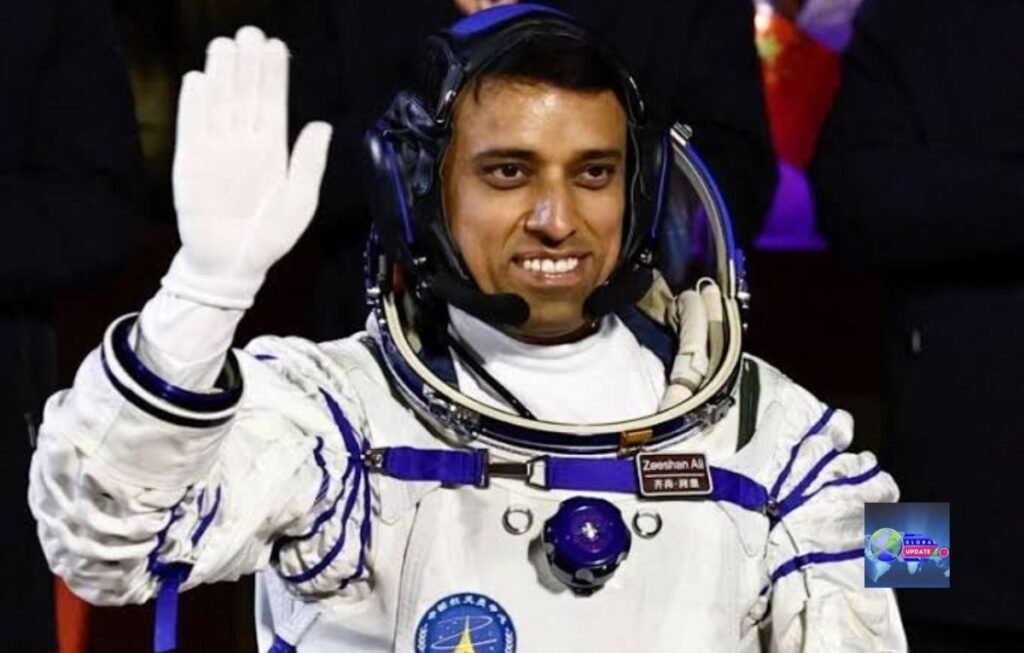

Pakistan has achieved a historic milestone in space exploration as Wing Commander Muhammad Zeeshan Ali became the first Pakistani to reach Earth orbit and the first foreign astronaut to board China’s Tiangong Space Station.
His journey aboard the Shenzhou-24 spacecraft on November 25, 2026, represents a major achievement for Pakistan’s scientific community and its growing cooperation with China.
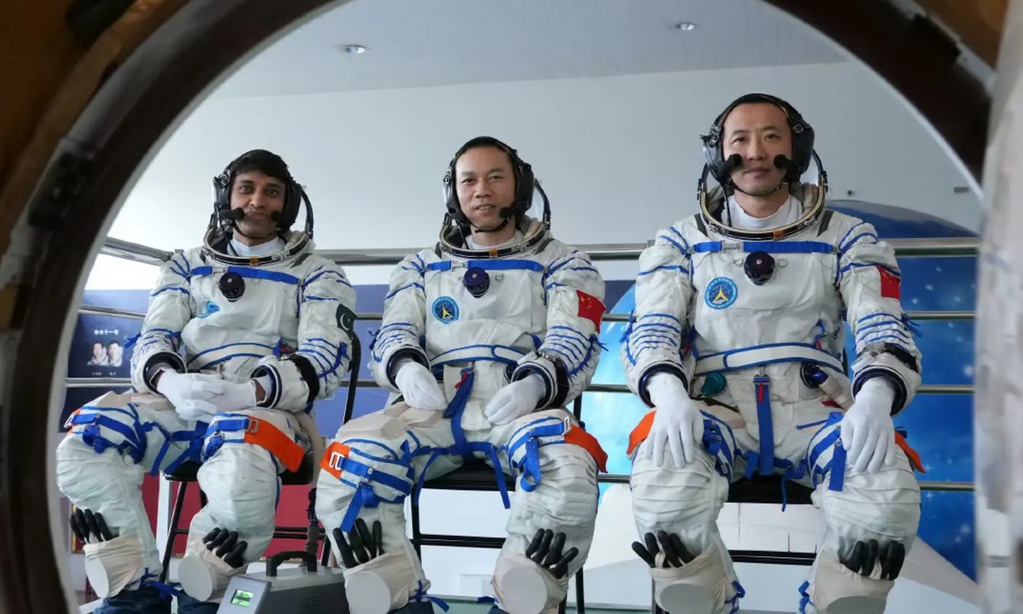
The historic mission has attracted international attention, with Pakistanis celebrating the achievement as an important step towards the country’s future in space research.
Zeeshan Ali’s journey also marks a new chapter in China’s efforts to expand international cooperation in its human spaceflight program.
Historic Space Mission
Muhammad Zeeshan Ali traveled into space aboard China’s Shenzhou-24 spacecraft on November 25, 2026. The spacecraft was launched from the Jiuquan Satellite Launch Center in northwest China using a Long March-2F rocket.
The launch took place at 8:18 am Beijing time, which was 5:18 am in Pakistan. Approximately six hours later, the three-member crew entered the Tiangong Space Station.
The crew included Chinese commander Tang Hongbo, flight engineer Wu Yi, and Pakistani astronaut Zeeshan Ali.
Their successful arrival marked the first time a foreign astronaut had joined China’s crewed space program aboard its orbital station.
Ali’s achievement is particularly significant because he became the first Pakistani citizen to travel into Earth’s orbit.
Who Is Zeeshan Ali?
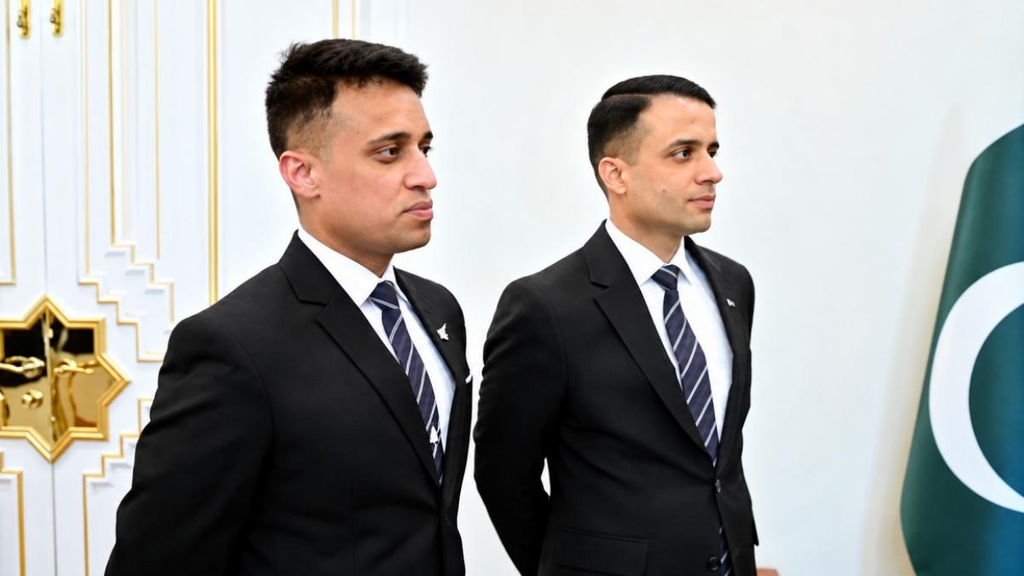
Muhammad Zeeshan Ali is a 40-year-old wing commander and pilot associated with Pakistan’s space program.
He was selected to represent Pakistan in China’s human spaceflight program following a cooperation agreement between Pakistan’s Space and Upper Atmosphere Research Commission (SUPARCO) and the China Manned Space Agency.
Before his historic flight, Ali underwent approximately seven months of intensive training in Beijing. His preparation included astronaut training and Chinese-language classes and activities designed to help him adapt to China’s space program.
Interestingly, his preparation also included learning Chinese songs, reading Chinese poetry, practicing calligraphy, and playing table tennis.
His dedication and preparation helped him join an important international space mission.
Inside China’s Tiangong Space Station
Tiangong, which means Heavenly Palace, is China’s independently developed space station. It became fully operational in 2022 and serves as an important platform for scientific research and technological development.
The station consists of three main modules: Tianhe, Wentian, and Mengtian. These modules support astronauts during their missions and provide laboratories for scientific experiments.
Tiangong is designed to support long-term human presence in orbit, allowing astronauts to conduct research in microgravity.
For Zeeshan Ali, entering the station was a historic experience. He joined the existing Chinese crew and became the first foreign astronaut to visit the facility.
Scientific Experiments in Space
One of the most important objectives of Ali’s mission is scientific research. According to Pakistani and Chinese space authorities, the mission includes experiments developed through cooperation between the two countries.
Four Pakistani scientific experiments developed by universities are part of the mission, focusing on advanced materials, agriculture, and biological research.
Some research involves studying microalgae as a potential source of food and oxygen for future space missions. Another experiment focuses on understanding how spaceflight affects quinoa seeds.
These experiments could help researchers understand how biological materials respond to the space environment.
The mission also involves research into advanced materials, including technologies that could be useful for future spacecraft.
According to Chinese space authorities, the wider mission includes around 90 scientific experiments and technology tests.
Seven Months of Preparation
Preparing for a space mission requires physical fitness, technical knowledge, and the ability to work under challenging conditions.
Zeeshan Ali spent seven months training in Beijing before joining the Shenzhou-24 mission.
His preparation included learning the Chinese language so he could communicate effectively with his fellow astronauts and understand mission instructions.
He also became familiar with Chinese culture and traditions during his training.
Learning songs and poetry, practicing calligraphy, and participating in recreational activities were among the interesting parts of his preparation.
This international training experience helped prepare him for working alongside Chinese astronauts aboard Tiangong.
Pakistan and China’s Space Partnership
The historic mission is the result of growing cooperation between Pakistan and China in science and technology.
In February 2025, SUPARCO and the China Manned Space Agency signed a cooperation agreement that opened opportunities for Pakistani astronauts to participate in China’s space program.
Under the arrangement, Pakistani candidates received training in China, with one eventually selected to participate in a crewed mission.
Zeeshan Ali’s selection represents the first major human spaceflight achievement under this cooperation.
Both countries have expressed their commitment to expanding collaboration in space exploration, scientific research, and advanced technology.
The mission also coincides with the 75th anniversary of diplomatic relations between Pakistan and China in 2026.
Shehbaz Sharif Speaks to Zeeshan in Space
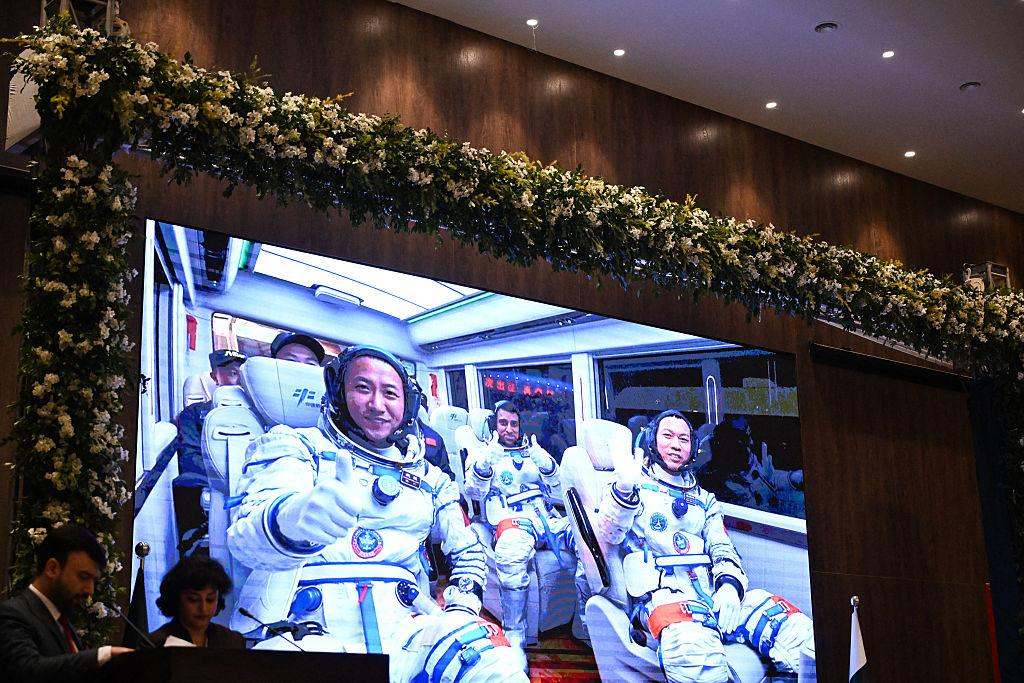
On November 28, 2026, Prime Minister Shehbaz Sharif held a live conversation with Pakistan’s first astronaut while he was aboard the Tiangong Space Station.
The conversation took place from SUPARCO headquarters in Islamabad. Chief of Defense Forces and Chief of Army Staff Field Marshal Syed Asim Munir, Deputy Prime Minister Ishaq Dar, and Chinese Ambassador Jiang Zaidong were also present.
During the conversation, the prime minister congratulated Zeeshan Ali on his historic achievement and praised the scientists, engineers, and institutions involved in the mission.
He described the journey as an important achievement for Pakistan and said it would encourage young people to pursue careers in science, technology, and innovation.
The conversation also highlighted the importance of Pakistan-China cooperation in advancing scientific research and future space exploration.
All About Pakistan’s First Astronaut
Zeeshan Ali’s mission has also created memorable moments beyond scientific research.
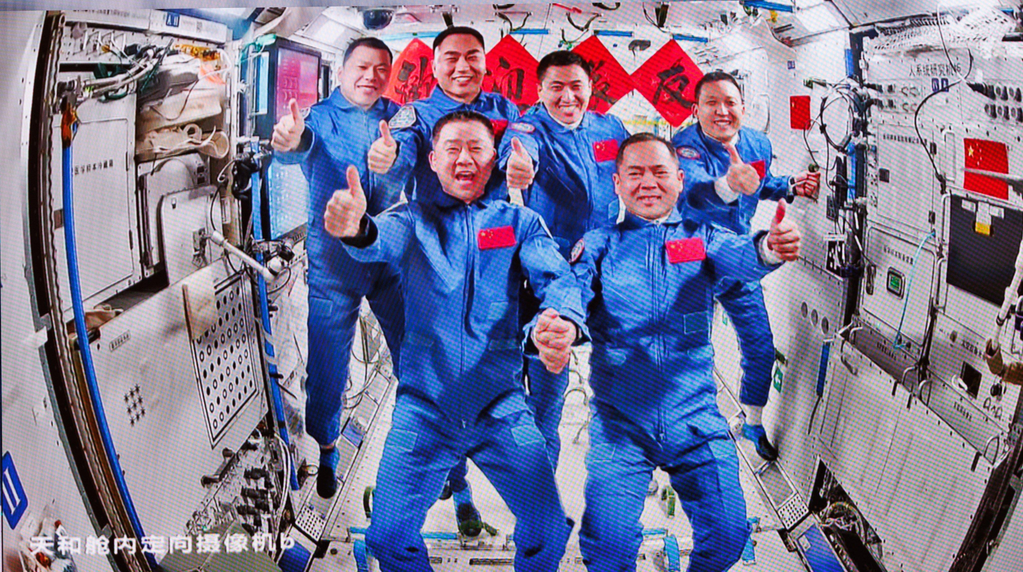
During his time aboard the station, he appeared in a group photograph with his Chinese colleagues, creating a historic image of international cooperation in space.
He also recited poetry by Pakistan’s national poet, Allama Muhammad Iqbal, while aboard Tiangong.
His recitation drew attention because it linked Pakistan’s literary heritage to its historic space achievement.
Another interesting detail involved the food prepared for him. Chinese space authorities arranged a special halal food selection featuring more than 100 varieties, including beef nihari, lamb korma, and curried chickpeas.
These arrangements reflected the importance of accommodating the cultural and dietary needs of international astronauts.
Latest Update: Return to Earth
As of November 29, 2026, Zeeshan Ali has completed his scheduled activities aboard Tiangong, and the two space crews have completed their in-orbit handover.
According to reports citing the China Manned Space Agency, Ali is scheduled to return to Earth aboard the Shenzhou-23 spacecraft alongside Chinese astronauts Zhang Zhiyuan and Li Jiaying.
The return mission is expected to take place in the coming days at the Dongfeng landing site in northern China.
The landing authorities have completed important safety preparations, including search-and-rescue drills and equipment checks.
Ali’s return will mark the completion of his historic short-duration space mission.
Why This Achievement Matters
Zeeshan Ali’s journey is more than an individual accomplishment. It represents an important opportunity for Pakistan to develop its scientific capabilities and participate in international space research.
The mission demonstrates how cooperation between countries can create opportunities for knowledge sharing, technological development, and scientific discovery.
For Pakistani students, particularly those interested in science, mathematics, engineering, and technology, his achievement provides an inspiring example of what dedication and education can make possible.
Pakistan’s participation in China’s space program may also create opportunities for future researchers and astronauts.
Future of Pakistan’s Space Program
Pakistan’s historic participation in the Tiangong mission could open the door to further cooperation with China.
Future opportunities may include additional astronaut training, joint scientific experiments, and participation in more advanced space research projects.
Research conducted during the mission could contribute to developments in agriculture, biological sciences, and advanced materials.
Pakistan’s space program will need continued investment in education, research facilities, technology, and scientific training to build on this achievement.
Developing a new generation of scientists and engineers will be essential for achieving long-term progress.
Final Thoughts
Muhammad Zeeshan Ali’s journey aboard China’s Tiangong Space Station is a proud moment for Pakistan and an important milestone in international space cooperation.
From months of preparation in Beijing to conducting scientific activities in orbit, his mission represents the efforts of Pakistani and Chinese scientists, engineers, and space authorities.
His historic flight has also sent an inspiring message to young people that education, determination, and scientific curiosity can open doors to extraordinary opportunities.
As Pakistan awaits his safe return to Earth, Zeeshan Ali’s achievement will remain an important chapter in the country’s journey towards scientific advancement and space exploration.